

NewzVille Desk
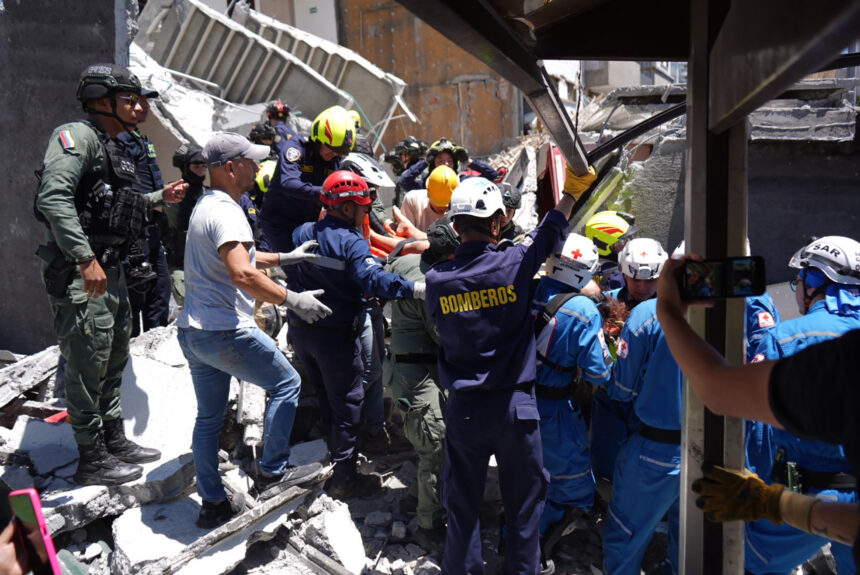
A day after a 7.4 magnitude powerful earthquake hit western Colombia on August 10 in the morning, killing at least 224 people and leaving many more feared trapped, volunteers and rescuers cleared rubble with their bare hands and buckets to search for survivors.
Colombian President Abelardo de la Espriella, just 3 days after being sworn into the job, declared a state of emergency and vowed a concerted rescue effort.
The deaths were concentrated in Cali, Pereira, Manizales, and Quibdo. Residents of the Pío XII condominium in the El Lido neighbourhood of Cali, which was hardest hit by the quake, gathered around a campfire amid the ruins of their community.
In Cali, home to about 2.2 million people, at least 85 people were killed. Dozens of buildings were left leaning precariously or destroyed outright, forcing residents into the streets. The U.N.’s humanitarian office on August 11 said that more than 5,000 homes were damages and 24 health facilities, including in the city of Cali, have been affected.
Aftermath of the quake, messages of support poured in from countries across the region and the world.
The U.S. announced $15.5 million in emergency relief. European Union Chief Ursula von der Leyen said the EU had mobilized Copernicus, a satellite service, to help with rescue operations. Israel, Mexico, Ecuador and France also offered assistance.
The quake was felt across Colombia, including the capital Bogota. At a depth of 110 kilometers, the quake was also felt in neighboring Ecuador and Panama. According to experts at the U.S. Geological Survey the quake was likely caused by movement along a deep fault within the Nazca tectonic plate. The devastation comes less than 2 months after powerful twin quakes rattled neighboring Venezuela, killing over 6,300 people and leaving tens of thousands homeless.