

NewzVille Desk
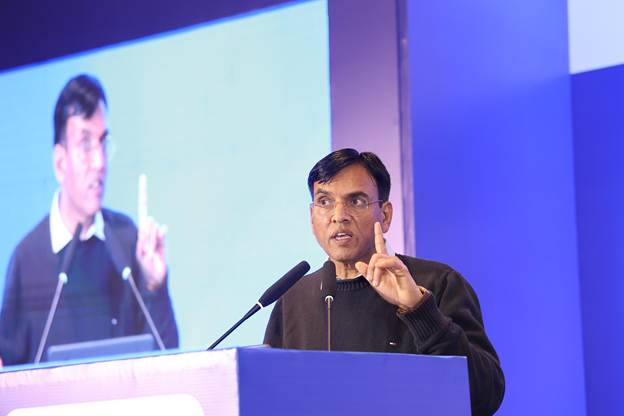
“To synergize education and employment, skill development must be at the core of our efforts. By fostering innovation, enhancing productivity, and preparing individuals for the workforce, we are creating jobs and building a global talent hub.” Minister of Labour and Employment Dr. Mansukh Mandaviya said this while addressing a gathering at “Conference on Future of Jobs” organized by the Ministry of Labour & Employment (MoLE), Government of India, in collaboration with the Confederation of Indian Industry (CII) on 15 January 2025 in New Delhi.
The theme of the Conference was “Shaping Tomorrow’s Workforce: Driving Growth in a Dynamic World”.This event convened policymakers, industry leaders, and experts to deliberate on the evolving employment landscape and curate strategies for a future-ready workforce in India.
By fostering strong industry-academia linkages, we can create a skilling model tailored to India’s unique needs. Skilling should go beyond certificates and focus on equipping individuals with practical expertise to meet the dynamic demands of the industry and self-employment sectors. It is time to rethink our approach to skilling—rather than focusing solely on certifications, the goal should be to develop professionals with the actual skills needed to excel in the industry.
Sumita Dawra, Secretary, Ministry of Labour & Employment, Government of India, stated that to thrive in a rapidly evolving landscape, three key questions have emerged: How do we develop a digitally proficient workforce equipped to navigate an increasingly tech-driven job market? What strategies can we employ to build a truly inclusive workforce, where diversity is valued, and everyone is given equal opportunities? Additionally, as industries prioritize environmental sustainability, how can we integrate eco-friendly practices and values into our workforce culture?
“A skilled and adaptable workforce is crucial for attracting investments in key sectors such as healthcare, manufacturing, logistics, and green jobs. Strengthening labor-intensive industries ensures equitable opportunities for diverse demographics, including those with limited access to advanced education,” she emphasized.
She highlighted India’s position as the “GCC Capital of the World,” with 1,700 Global Capability Centres (GCCs) employing over two million people—a number projected to grow significantly by 2030.
“In these GCCs, we see the adoption of emerging technologies such as Artificial Intelligence, data analytics, robotic process automation, digital commerce, cybersecurity, blockchain, augmented reality, and virtual reality. This serves as evidence of India’s exceptional technological talent,” she added.
The conference spotlighted India’s employment transformation, underscoring a significant rise in jobs from 471.5 million in 2014-15 to 643 million in 2023-24, according to provisional estimates from the RBI’s KLEMS database. Key growth drivers include increased investments, the PLI scheme, and advancements in technology. MSMEs and startups have played pivotal roles in reshaping the workforce landscape.
Emerging fields such as green jobs, digital technologies, and service sectors like hospitality, tourism, and healthcare are reshaping the employment ecosystem.
The conference ended in actionable policy recommendations to prepare India’s workforce for a dynamic global economy like
# Enhancing skill development and technological upskilling.
# Fostering public-private partnerships for inclusive growth.
# Promoting digital literacy and eco-friendly workforce values.
# Prioritizing inclusivity and sustainability in work
force development.