

NewzVille Desk
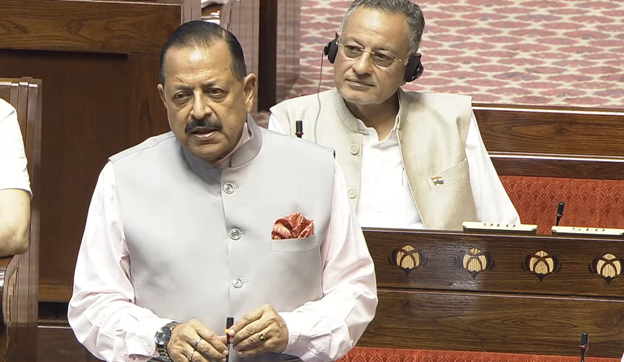
Union Minister of Science and Technilogy, Dr. Jitendra Singh initiated discussions on Public Examinations Amendment Bill 2026 in Lok Sabha today.
Singh said that the Public Examinations (Prevention of Unfair Means) Amendment Bill, 2026 is a significant step towards further strengthening the legal framework to curb examination-related malpractices and protect the interests of students and youth across the country.
Dr. Jitendra Singh said the legislation reaffirms the Government’s commitment to safeguarding the future of students and reflects Prime Minister Shri Narendra Modi’s resolve to ensure that no one is allowed to compromise with the aspirations of the country’s youth. He described the legislation as a milestone in strengthening the integrity of India’s public examination system.
The Minister said incidents of question paper leakages and examination-related malpractices have occurred across different States over the years, highlighting the need for a comprehensive national legal framework.
He noted that the Government enacted the Public Examinations (Prevention of Unfair Means) Act, 2024 as the country’s first comprehensive legislation to deal with unfair means in public examinations and is now proposing further amendments based on the experience gained during its implementation to make the law more stringent and effective.
Dr. Jitendra Singh said the Act covers examinations conducted by major recruitment agencies, including the Union Public Service Commission (UPSC), Staff Selection Commission (SSC), Railway Recruitment Boards (RRBs), Institute of Banking Personnel Selection (IBPS), as well as the National Testing Agency (NTA) for higher education admissions. He recalled that the 2024 Act made offences under its ambit cognizable, non-bailable and non-compoundable with stringent penal provisions.
Highlighting the key provisions of the Amendment Bill, the Minister said the punishment for persons resorting to unfair means is proposed to be enhanced from imprisonment of three to five years to five to ten years, while the maximum fine is proposed to be increased from ₹10 lakh to ₹50 lakh. For service providers involved in such offences, the maximum fine is proposed to be increased from ₹1 crore to ₹5 crore and the period of debarment from conducting public examinations from four years to eight years. Punishment for directors and senior management of service providers is also proposed to be enhanced from three to ten years’ imprisonment to five to ten years, with the maximum fine being increased from ₹1 crore to ₹5 crore. The Bill further proposes to increase the punishment for organised crime from five to ten years’ imprisonment to seven to ten years and enhance the maximum fine from ₹1 crore to ₹10 crore.