

NewzVille International
Iran struck of missile and drone attacks today on the UAE, Kuwait and Bahrain. The latest strikes seem to be a direct response to earlier US and Israeli attacks on two major Iranian steel plants, with Tehran now targeting equivalent industrial assets in the Gulf.
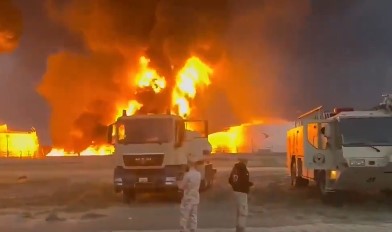
Emirates Global Aluminium has confirmed damage to its Al Taweelah production base in Abu Dhabi, while Aluminium Bahrain, known as Alba, says two of its workers were mildly hurt when the Revolutionary Guards struck its facilities, citing their alleged ties to US military and aeronautics firms.
The UAE’s defence ministry says its systems intercepted 20 ballistic missiles and 37 drones yesterday alone, and since the war began, the country has engaged nearly 400 ballistic missiles, 15 cruise missiles and close to 1,900 drones. The wider industry is also feeling the strain. Gulf aluminium producers supply around nine percent of the world’s metal, and most have been unable to move their product through normal shipping routes since the Strait of Hormuz was effectively shut to commercial traffic.
Israel has, meanwhile, launched a wide-scale wave of strikes on the infrastructure of Iran in the heart of Tehran. The Israeli military says dozens of weapons storage and production sites were hit, along with ballistic missile production and storage facilities, aerial defence systems and observation posts. Several temporary command centres were also dismantled in the strikes, with the IDF saying commanders who were operating inside those headquarters were killed.
The strikes represent one of the most significant Israeli operations inside Iranian territory since the conflict began, targeting what Tel Aviv describes as the core of Iran’s military command and production apparatus. Iranian officials and the Revolutionary Guard Corps are already warning of fresh retaliatory action, including threatened strikes against US and Israeli universities across West Asia, unless Washington condemns what Tehran calls attacks on Iranian academic institutions.
Yemen’s Houthis have announced a second strike targeting Israel in a significant escalation of the ongoing West Asia conflict, using a barrage of cruise missiles against vital and military sites in Israel.
Yemen’s Houthis have launched a second major missile attack on Israel, marking what now appears to be a sustained new front in the West Asia conflict. The group says its position is clear – the attacks will continue for as long as Israel continues its military operations.
With two large-scale strikes already carried out, the Houthis have shown they have both the range and the capability to keep up the pressure. While they operate independently, their actions remain aligned with Iran’s broader regional objectives.
What makes the Houthis’ involvement particularly significant is geography. The group controls territory near the Bab el-Mandeb Strait, at the southern entrance to the Red Sea, one of the world’s most important shipping routes.
This narrow waterway connects the Red Sea to the Gulf of Aden and carries a large share of global oil shipments and cargo heading toward Europe. Any escalation here could move beyond missile strikes and begin disrupting global trade, raising international concerns.
The Houthis have effectively turned a two-front conflict into three. And unlike Hezbollah in Lebanon or armed groups in Iraq, they are far from Israel’s borders, making a direct ground response difficult. That distance, combined with their location near a critical maritime choke point, makes the Houthis one of the most complex challenges to emerge in this widening conflict.