
NewzVille Desk
Large cardamom
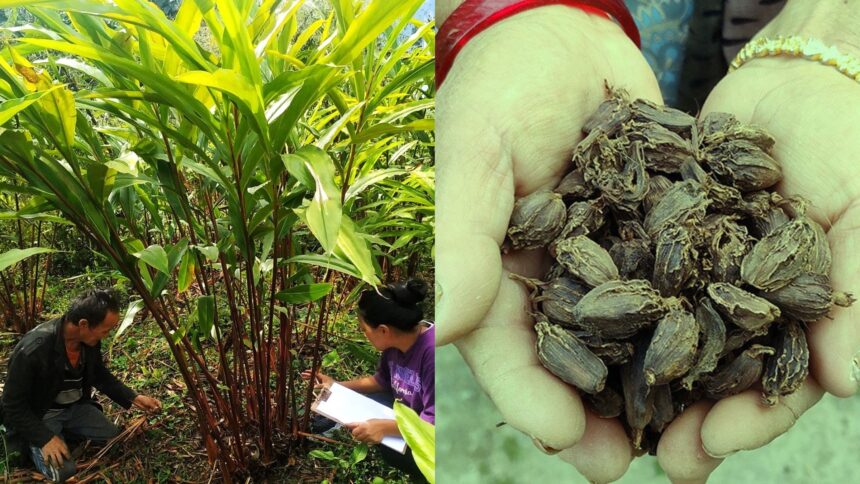
Badi Elaichi or Black Cardamom or Large Cardamom, a native, high-value, niche cash crop and cultural heritage of Sikkim, has been a vital source of livelihood for farmers in the himalayan state. It is the third most valuable spice in the world after saffron and vanilla, with a forecasted market size in 2033 of USD 289 million or INR 2500 crore.
Historically, the crop ensures high economic returns and prosperity in for Sikkim farmers. Sikkim contributes nearly 85% of the national production, making India the leading producer in the world.
Why the Production Declined?
However, over the past two decades, disease outbreaks, climate change, soil health, and unsustainable practices have severely reduced the crop’s lifespan and production, profoundly impacting rural communities.
Disease pressures exacerbated due to climate change have grown into epidemics, particularly fungal diseases such as leaf blight and rhizome rot, fusarium rot, along with viral diseases like Chirkey disease, and Foorkey disease damaging the crop.
So the productive area under this crop and the production have declined by more than half, translating to an annual loss of about Rs 318 crore in rural incomes.
The plant is vegetatively propagated using root suckers for faster returns. However, this clonal multiplication makes the crop especially vulnerable to pathogens and reduces plant vigor due to low genetic variation.
Hence, the life-span of the crop has been reduced from 30 years to about 5-6 years, thus yielding only up to 2-3 harvests before withering away.
As a result, Nepal now accounts for 68% of the global production, followed by India and Bhutan. This evidence underscores the urgent need to revive large cardamom cultivation in Sikkim, ensuring sustainable livelihoods for the rural community.
Initiatives by Govt.of Sikkim
The “Mero Alaichi, Mero Dhan” (My Cardamom, My Wealth) initiative was conceptualized by the Chief Minister Shri Prem Singh Tamang during a high-level meeting with the Department of Science and Technology on October 24, 2024. The main objectives of this initiative are to:
- Strengthen science and technology interventions to tackle the decline of large cardamom.
- Increase the crop’s productive lifespan to 10-15 years from the present 5-6 years.
- Develop capacity and infrastructure at the state level to tackle such issues in the future.
Long-term Solutions by DST, Sikkim
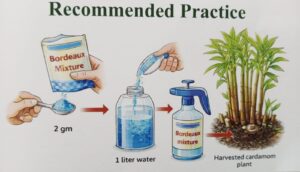
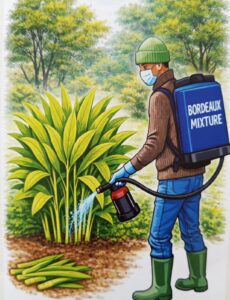
Department of Science and Technology, Government of Sikkim came up with concrete and long-term solutions. According to the field observations and trials indicate that immediate post-harvest treatment of the rhizome region using Bordeaux mixture can significantly reduce fungal infection and stimulate the development of new tillers, thereby improving plant health and longevity.