

NewzVille Desk
In a major breakthrough, researchers from Indian Institute of Technology (IIT) Madras, Monash University and Deakin University, Australia, recently have developed a cutting-edge nanoinjection drug delivery platform that has the potential to make breast cancer treatment safer and more effective.
The approach creates a precise and sustained therapeutic system that minimises damage to healthy cells by combining nanoarchaeosome-based drug encapsulation with silicon nanotube (SiNT)-based intracellular delivery.
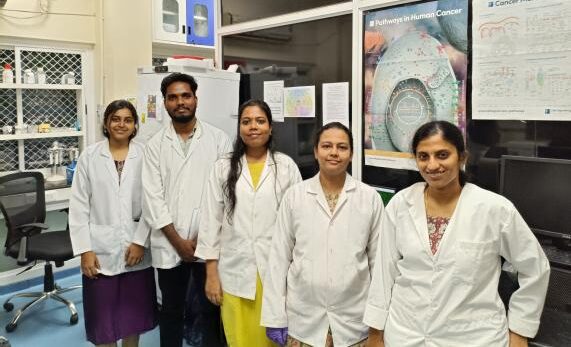
Speaking about the research, Dr. Swathi Sudhakar, Assistant Professor of IITM says, “This research could have transformative implications for healthcare delivery in low- and middle-income countries like India, where access to advanced cancer therapies remains limited by cost.
“By enabling targeted delivery of smaller doses with higher efficacy, the system can potentially lower the overall expense of cancer treatment and improve patients’ quality of life. The platform also aligns with national goals for affordable healthcare innovation and could eventually be adapted for use in treating other forms of cancer,” she adds.
Breast cancer is one of the leading causes of mortality among women worldwide. Conventional treatments such as chemotherapy and radiation often harm non-cancerous tissues due to systemic drug exposure.
To overcome these limitations, the researchers from India and Australia devised a nanoinjection system that delivers the anti-cancer drug doxorubicin directly into cancer cells using thermally stable nanoarchaeosomes (NAs) loaded into vertically aligned SiNTs etched onto a silicon wafer.
This integrated approach enhances the therapeutic efficacy of the drug while maintaining excellent biocompatibility.